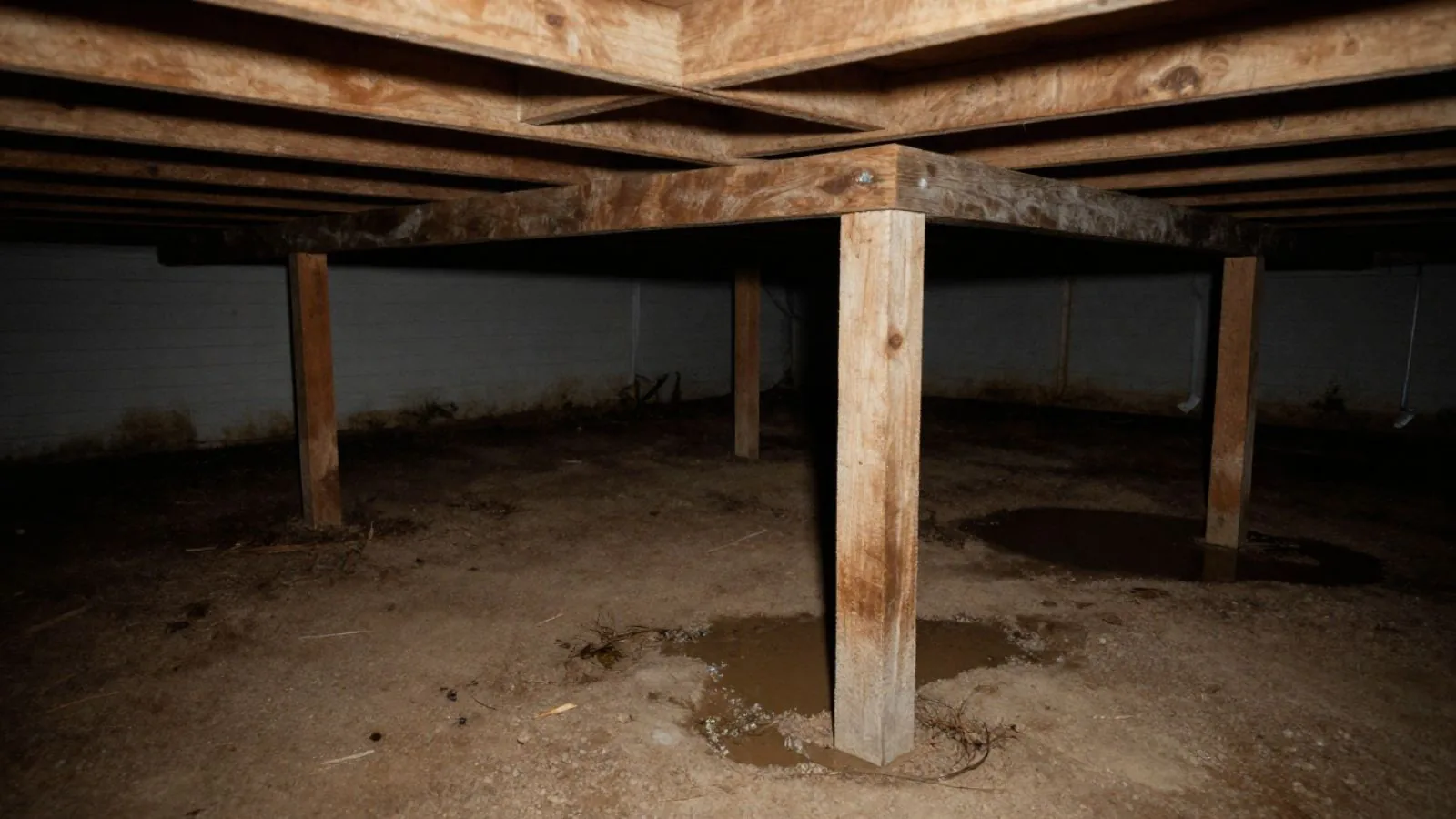
Crawl Space Water Damage Cleanup in Lorain, OH
The low void under a floor collects water from plumbing, rain and groundwater and rarely gets looked at. Wet joists and insulation up there can spread damage into the rooms above.
Crawl space water damage in Lorain begins with a look from the access hatch, never a crawl through standing water. Stay out if the space has live wiring near water or if you smell sewage. Call, describe what you can see from the opening and a crew will explain what to do while a response is arranged.
Why crawl spaces take on water
Rain runs along the foundation, groundwater pushes up after a thaw and plumbing in the floor system can leak for months with no one the wiser. Lorain sits on the Lake Erie shore, and low spaces below grade can fill after a long rain or a spring thaw. Gutters that dump at the wall and poor grading make it worse.
| Source | Signs | First step |
|---|---|---|
| Plumbing leak above | Drips, wet insulation, stained joists | Shut the water and call a plumber |
| Rain or groundwater | Puddles, damp soil, efflorescence on block | Check gutters and grading, then dry the space |
| Sewer or drain failure | Odor, dark water | Stay out, call dispatch |
| Humidity | Condensation on pipes and ducts | Control airflow and vapor barrier |
What a crawl space cleanup includes
- Pump out standing water through the access, with proper protection.
- Remove wet insulation and loose debris that cannot be dried.
- Run air movers and dehumidifiers to dry joists, subfloor and the soil surface.
- Fix or replace the vapor barrier so ground moisture stays out.
- Verify moisture readings in the floor above, not just the crawl space.
Wet joists hold moisture for weeks, and the floor above can cup or smell musty before anyone looks. Crews test both sides of the floor system, because a dry crawl space does not mean the structure is dry. Floors above are covered on the hardwood floor page.
What to look for from the access hatch
- Standing water, dark soil or a tide line on the foundation wall.
- Insulation that has fallen from the joists or looks gray and heavy.
- Rust on nails and hangers, or white powder on block walls.
- Wet or dripping pipes and ducts.
- Any smell of sewage or earth that was not there before.
Take photos from the opening before anyone enters. They show the starting condition for the crew and for your insurer, and they help decide how much protective equipment is needed.
How long a crawl space takes to dry
Soil and wood release moisture slowly, and a closed, cool space has little airflow. Drying equipment is placed to move air across joists and over the ground, and readings are repeated until the wood reaches a normal range. Rushing this step is how damp floors turn into musty floors a month later.
Water or damp air under the floor?
Describe what you see from the hatch and call. A crew will tell you what comes next.
Moisture-loving growth is common where air stays damp, so the mold remediation page explains containment and clearance. Standing water from the drain system calls for the stricter steps on the sewage backup page.
What crawl space cleanup costs depend on
- Water volume and access. Tight spaces slow pumping and removal.
- Insulation. Wet fiberglass is usually discarded and replaced.
- Vapor barrier. Replacement adds material and labor.
- Moisture source. A grading or drainage fix is a separate project.
- Floor above. Damage to the subfloor expands the scope.
Access and insulation change the labor more than the water does. Call (440) 276-9091 with what you saw at the hatch.
Insurers often exclude damage from groundwater or seepage over time, though a sudden pipe break is treated differently. Ask your insurer how it reads your policy, and photograph the space before work starts. Crawl space problems also turn up in Vermilion homes near the lagoons.
Questions we hear about this
Standing water, a running leak or sewage is urgent. A damp space with no active source is serious but less urgent. Call and describe it.
Only if the water is gone and wiring is safe. Otherwise look through the hatch with a flashlight and let a crew enter with protective gear.
Usually yes. Fiberglass that has absorbed water sags and stays wet against the joists.
Fix the source first. Gutters, grading, a sump or a vapor barrier may all be part of the answer. A drying crew handles the water already there.
Yes. Humid air and wet joists can cup floors, loosen finishes and cause musty odors in the rooms above.
Water spreading right now?
Call the 24/7 dispatch line, describe what you see, and get the next steps while you wait.
Call (440) 276-9091