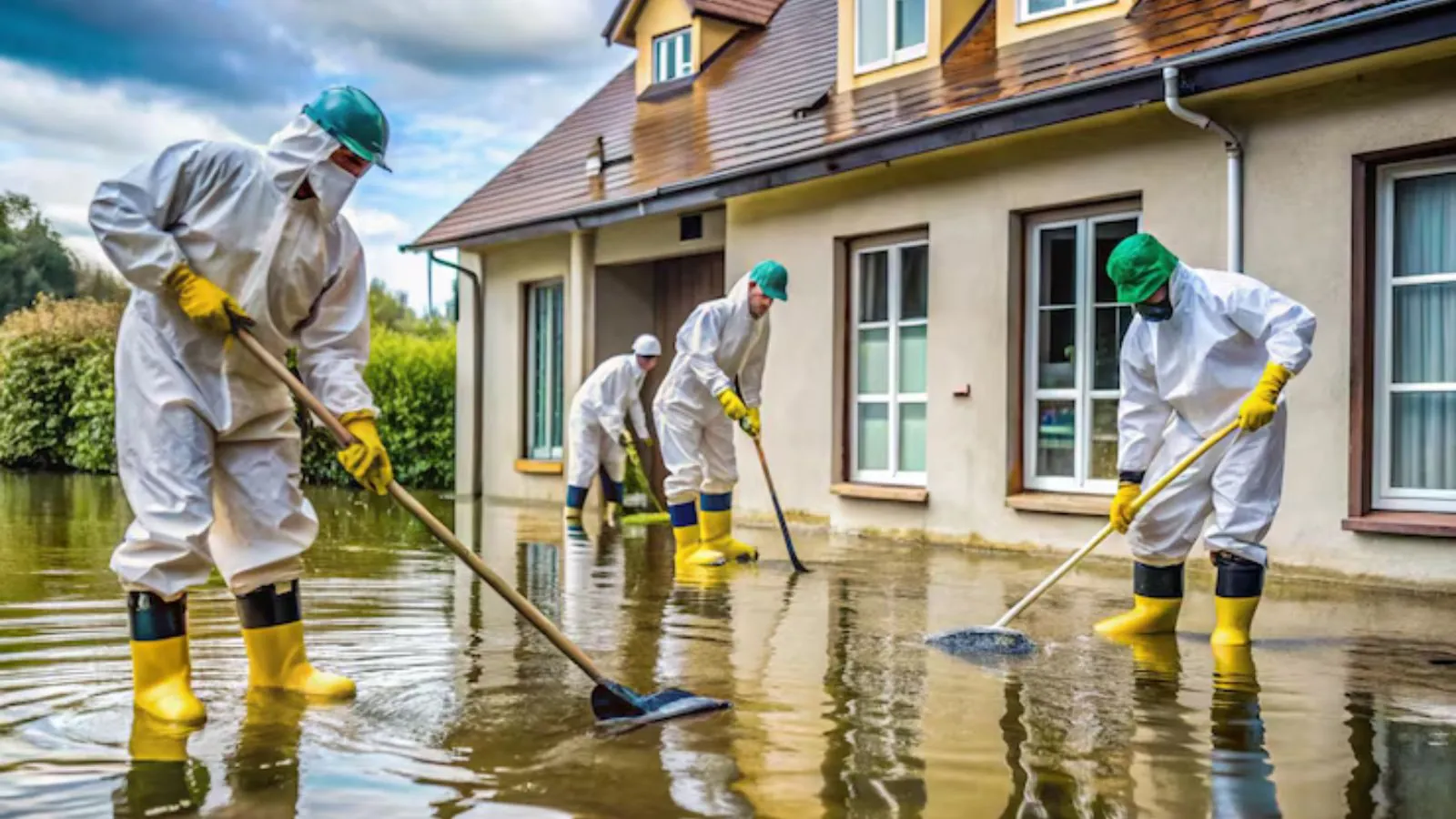
Water damage restoration in Lorain, OH: the first 24 to 72 hours
Water damage restoration is the work of stopping the water, removing what is standing, drying the building materials and repairing what could not be saved. In Lorain it starts with one call to a line that is answered 24/7, because a supply line does not wait for business hours. The sooner extraction begins, the less water reaches framing, subfloor and insulation.
Emergency water removal comes first and drying follows right behind it. Wet drywall, carpet pad and cabinet bases can hold moisture long after the surface feels dry, so crews measure with moisture meters and thermal cameras instead of trusting a hand on the wall. Mold needs moisture to grow, which is why the drying window matters more than any cleanup that comes later.
While you wait for the crew
- Stop the source if you can reach it safely. Close the shutoff valve for a fixture, or the main valve where the line enters the house.
- Cut power to wet areas only if the panel is dry and you can reach it without stepping in water.
- Lift small valuables, rugs and electronics off wet floors, and leave heavy furniture where it stands.
- Photograph the damage and the source before anything is moved.
- Keep children and pets out of any water that came from a drain, a toilet or outside.
Water and electricity do not mix
If water has reached outlets, power strips or the electrical panel, stay out of the room. Call the electric utility or 911 about any electrical or gas concern before you call dispatch. Never wade into standing water while circuits are live.
Water categories decide the plan
Crews sort water into three categories because the category sets what can be dried in place and what has to be removed. The table follows the categories used in the ANSI/IICRC S500 standard for water damage restoration.
| Category | Typical source | What it means for the job |
|---|---|---|
| Category 1 | Clean water from a supply line, tank or faucet | Drying in place is often possible when it is caught quickly, with the least demolition. |
| Category 2 | Washer or dishwasher discharge, sump overflow, toilet overflow without sewage | Carpet pad and other porous materials are usually removed, and surfaces are cleaned and treated. |
| Category 3 | Sewage, rising lake or river water, water that has stood for days | Porous materials come out, the area is contained, and crews wear protective gear. |
Ask any company whether its crews work to S500, and ask which category it believes your water falls into and why. Water that starts clean can slide toward Category 2 the longer it sits and the more materials it touches, which is another reason to call early.
Water damage repair starts after the drying ends
Drying and repair are separate jobs. Once moisture readings return to normal for the materials in the room, the repair phase replaces drywall, insulation, trim, flooring and paint. A written scope of work keeps mitigation (extraction, demolition of ruined material, drying) apart from repair (the rebuild), so you and your insurer can read each part on its own.
Two pages go deeper on this handoff. Structural drying explains the equipment and the readings, and wall and drywall repair covers what gets cut out and what gets replaced. The year a house was built changes the repair path, and your county property record or closing papers usually show it.
What water damage repair in Lorain costs depend on
- Water category. Clean water costs less to handle than sewage or lake water.
- Affected area. How many rooms and how far water traveled into walls and ceilings below.
- Materials. Hardwood, carpet and pad, drywall, plaster and cabinets dry or fail differently.
- Drying days and equipment. More wet material means more air movers and dehumidifiers for longer.
- Rebuild scope. Repairs after drying are priced apart from the mitigation work.
Scope and price are explained before work starts, and the written scope lists drying and rebuild separately. Want your real number? Call (440) 276-9091.