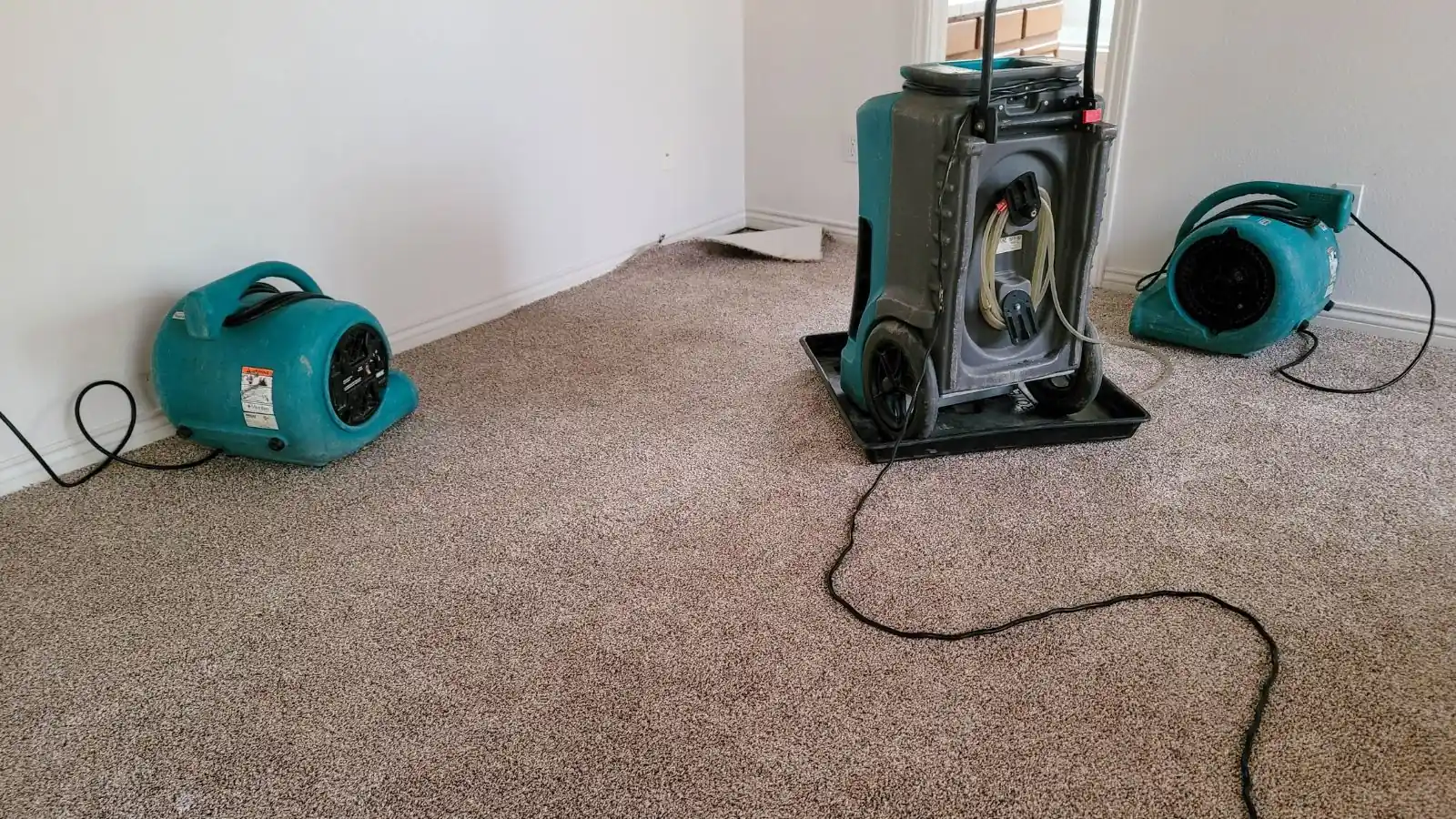
Structural Drying and Dehumidification in Lorain, OH
Once the standing water is gone, the water that matters is the water you cannot see. Structural drying pulls it out of framing, subfloor and drywall with measured, repeatable steps.
Structural drying in Lorain is the second half of every water loss. Extraction removes what is standing, and drying removes what soaked into wood, drywall, plaster, insulation and concrete. The work is built on measurements, because a floor that feels dry to the hand can still read wet in a meter.
The science in plain terms
Water leaves materials as vapor. Air movers push dry air across wet surfaces to lift that vapor, and dehumidifiers pull it out of the room so it does not settle on cooler surfaces. The cycle only works in a closed space, which is why windows stay shut during drying and why the equipment can sound loud and run warm.
Different materials release water at different speeds. Drywall and carpet give it up quickly, framing and subfloor are slower, and concrete and plaster are slowest. That is why a job can seem finished in the living room and still need days in the basement.
The steps of a drying job
- Find the wet areas with a moisture meter and thermal camera, then mark the boundaries.
- Record starting readings for each material and room.
- Place air movers, dehumidifiers and any specialty drying systems for floors or wall cavities.
- Return each day to measure again and adjust the equipment.
- Remove equipment only when every material reaches its dry reference value.
| Equipment | What it does | Where it fits |
|---|---|---|
| Air mover | Pushes air across wet surfaces to lift moisture | Floors, walls, cabinet fronts |
| Dehumidifier | Pulls moisture out of the room air | Whole rooms and sealed work areas |
| Wall cavity system | Moves dry air through a small opening in the wall | Wet insulation, stud bays, toe kicks |
| Floor mat system | Pulls air through a mat over a hard floor | Hardwood and laminate under repair |
Industry practice for this work is set out in the ANSI/IICRC S500 standard for professional water damage restoration, which is also the source of the water categories used on this site. Citing the standard describes the method and is not a claim about any certification.
Why the first readings matter
Starting readings set the goal. A crew compares wet materials against an unaffected area of the same material in your home and aims for that number. Without it, drying ends on guesswork, which is the usual reason a floor cups or a wall smells weeks later.
Water is out, but the room feels damp?
Call to talk through moisture checks and drying. No obligation to book anything on the call.
After a flood or sewage loss, wet porous materials are removed before drying starts. See the flood damage page and the sewage backup page for those steps. For floors, the hardwood floor page covers mat systems, and the carpet page covers pad.
What drying costs depend on
- Amount of wet material. More square footage and thicker materials need more equipment.
- Type of material. Concrete and plaster dry slowly.
- Days of equipment. Daily visits and readings add up.
- Water category. Contaminated water adds removal ahead of drying.
- Building conditions. Weather and airflow change how fast water leaves.
Equipment days follow the readings, so the plan is explained first. Questions go to (440) 276-9091.
Insurers often ask for drying logs and photos as part of a claim, so ask the crew for the daily readings. Humid weather off Lake Erie slows drying in summer, and a heated house helps in winter, so crews adjust equipment to the season. Drying jobs run the same way in Vermilion and the other towns served.
Questions we hear about this
It depends on the materials and the water. Many jobs run several days, and thick framing or concrete can take longer. Readings, not a set number of days, decide when equipment comes out.
Air movers and dehumidifiers run continuously to move and remove moisture. The noise is the cost of drying quickly, and the equipment leaves when readings are met.
Not during a drying job. Outside air can raise indoor humidity and slow the dehumidifiers. Crews keep the space closed for the equipment to work.
Sometimes a small opening or a removed baseboard lets dry air reach a wet cavity. Larger removal happens only when a material is too wet or contaminated to dry.
Final readings match the dry standard for each material, and the crew records them. Ask for the log for your records or your insurer.
Water spreading right now?
Call the 24/7 dispatch line, describe what you see, and get the next steps while you wait.
Call (440) 276-9091