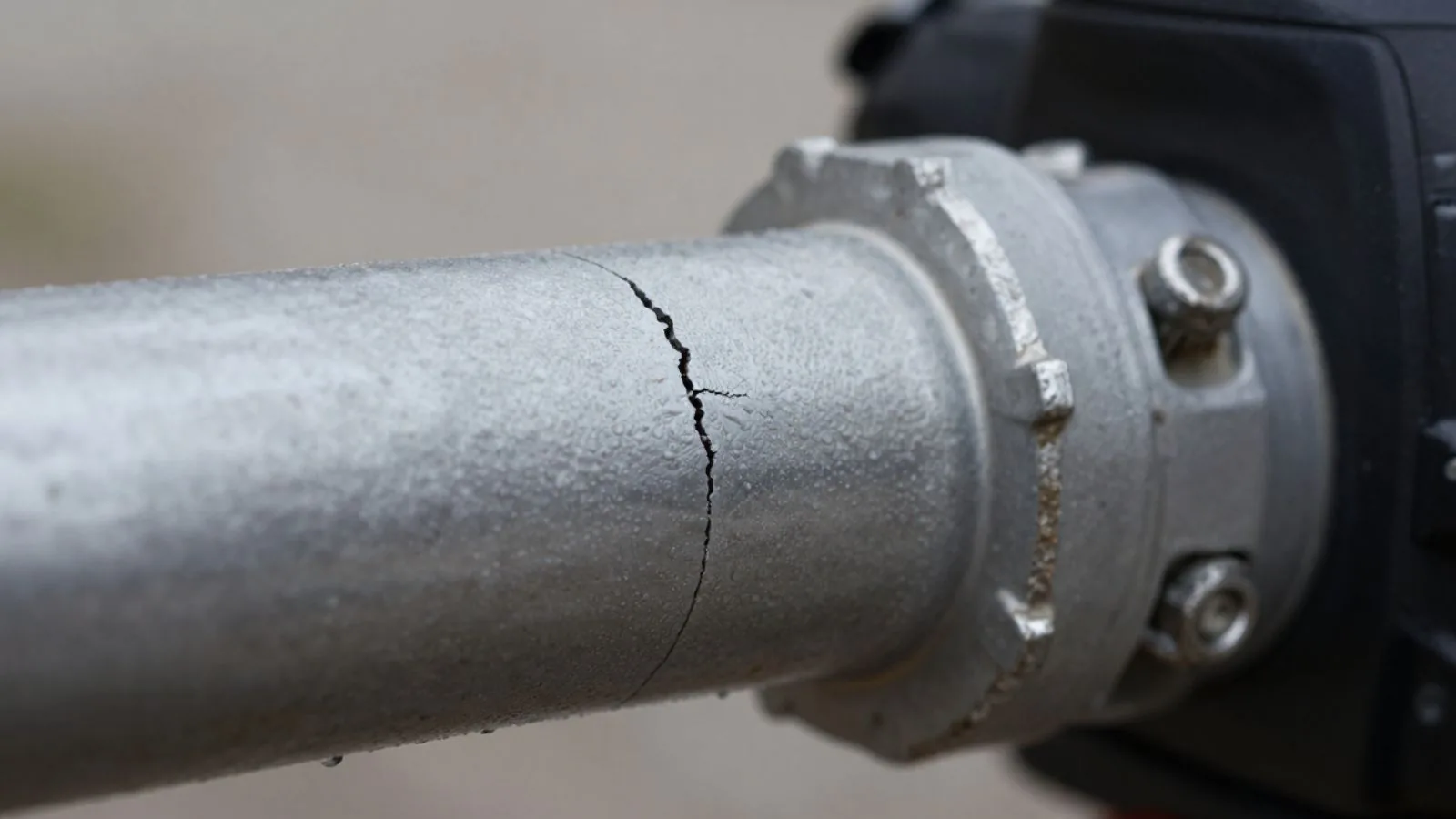
Emergency Frozen Pipe Water Damage in Lorain, OH
A pipe that froze and split often does its damage after the thaw, when ice melts and water starts flowing through the crack. Here is what to do before and after that moment.
Frozen pipe water damage in Lorain tends to show up in the cold months, and the call line is answered 24/7 when it does. If a pipe has frozen but has not leaked, open the nearest faucet, shut the main if you see a bulge or frost on the line, and call for help before you try to thaw anything with a flame. If water is already coming through, close the main and leave the electrical panel alone.
Why the damage comes after the thaw
Ice expands inside a pipe and splits it, but the ice plug also holds the water back. Nothing leaks until the plug melts, which can happen when the heat comes back on, when the day warms up or when someone opens a tap. The first sign is often the sound of running water inside a wall.
Lorain sits on Lake Erie, and cold air coming off the lake can sit on exterior walls for days. Pipes in unheated garages, crawl spaces, exterior walls and the area near a rim joist are the usual victims.
What to do while the pipe is still frozen
- Turn the nearest faucet on a little so water can move as the pipe thaws.
- Open cabinet doors under sinks on exterior walls and let room air reach the pipes.
- Warm the area with a space heater placed well away from anything that can burn, or a hair dryer on low.
- Never use an open flame, a torch or a heat gun on a pipe.
- If you see a split, bulge or frost on the line, close the main and call.
Sheffield Lake adds a local twist. The city says its water department thaws frozen meters, while frozen pipes inside the home are the owner's responsibility, so the cleanup falls to you. If your pipe froze in Sheffield Lake, plan on a plumber and a drying crew rather than a city call.
The cleanup after a frozen pipe splits
Crews extract standing water, then open the wall or ceiling at the split so the cavity can dry. Pipes in exterior walls usually mean wet insulation, which holds moisture against the drywall and the sheathing. Thermal cameras show the path the water took, and moisture meters set the starting readings for the drying equipment.
| Where the pipe froze | Typical damage | Usual handling |
|---|---|---|
| Exterior wall | Wet insulation, drywall and baseboards | Open the wall, remove wet insulation, dry framing |
| Garage or crawl space | Wet joists and subfloor | Extract, dry the floor system from below |
| Attic | Ceiling stain and sag below | Control the source, dry or remove ceiling |
| Basement ceiling | Wet joists and finished ceiling | Extract, open the ceiling, dry the cavity |
Pipe split and water flowing?
Close the main and call. Dispatch walks you through the next steps while the response is arranged.
What frozen pipe damage costs depend on
- Time between the thaw and the shutoff. A minute of flow and an hour of flow are different jobs.
- Where the split is. Exterior walls and ceilings hide more water than an exposed basement pipe.
- Insulation type. Batts hold water, closed-cell foam sheds it.
- Rooms below. Water that dripped through a floor adds scope.
- Repair work. Drywall, trim and paint come after drying is finished.
Where the pipe split decides how much wall comes open. Ask about yours at (440) 276-9091.
Many homeowners policies treat a sudden freeze-and-burst as a covered event, though conditions can apply, especially when a home was left unheated. Ask your insurer what yours requires, and photograph the split and the wet areas before cleanup starts. Related damage is covered on the burst pipe page and the wall and drywall page.
Prevention helps next winter: insulate lines in cold spaces, keep the heat on when you travel and know where your main shutoff is before you need it. When a repair does require a plumbing permit, the Lorain Building Division at City Hall issues them.
Questions we hear about this
Yes. Cold snaps do not keep office hours, and neither does dispatch, which includes holidays. A crew is arranged same day when available, with no arrival time promised on the call.
A hair dryer or a space heater placed safely is acceptable. Open flames are not, because they can ignite framing and can crack the pipe. If the pipe has already split, thawing will start the leak, so call first.
Look for a bulge, frost on the line, a drop in water pressure or the sound of running water in a wall. A wet ceiling or a stain on drywall means water is already moving.
Often yes when the pipe is inside it. A small opening at the split lets the cavity dry and lets the plumber reach the pipe. A moisture reading decides how much is needed.
Many policies cover sudden pipe bursts, though they can require the home to have been heated. Check your policy or ask your insurer, and document everything with dated photos.
Water spreading right now?
Call the 24/7 dispatch line, describe what you see, and get the next steps while you wait.
Call (440) 276-9091