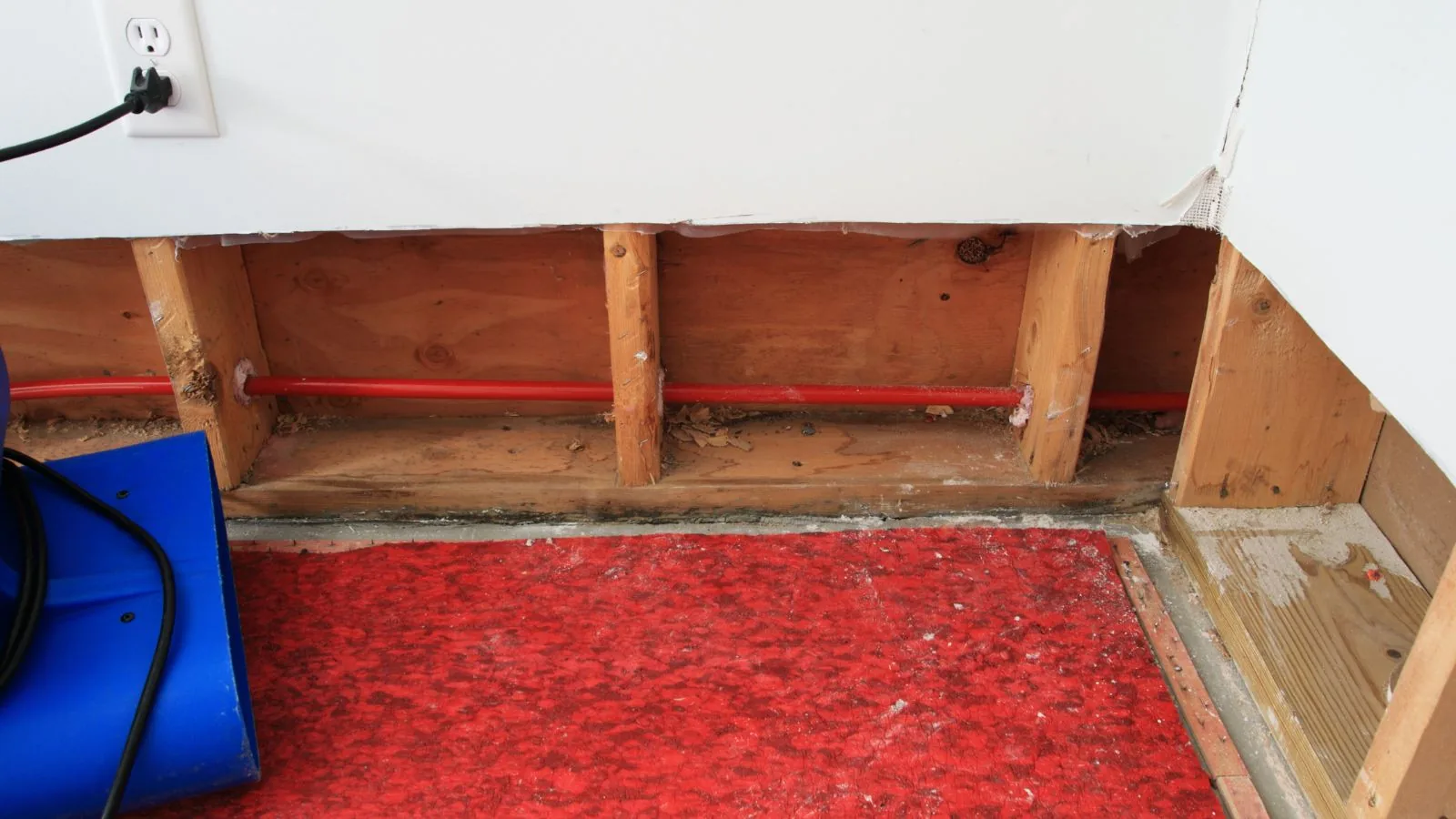
Wall and Drywall Water Damage Repair in Lorain, OH
Drywall absorbs water through its paper face and wicks it upward. A stain you can see is often a fraction of what is wet behind it.
Wall and drywall water damage repair in Lorain begins with the source. Stop the water, then look at the paint for bubbles, stains or soft spots and press gently with a thumb. Soft, crumbly drywall is finished, while firm, lightly stained board can sometimes be dried. Do not paint over a wet wall.
How water moves in a wall
Gypsum board sucks water upward like a wick. Insulation in the cavity holds it against the board and the studs. Baseboards, trim and the bottom plate soak up water from the floor. That is why crews check wall bottoms and cavities with a meter, not by eye.
| Wall condition | Meaning | Usual action |
|---|---|---|
| Stain, firm board | Light, brief wetting | Dry, seal, paint |
| Bubbling paint | Moisture behind the paint | Check readings, dry cavity |
| Soft or crumbly board | Saturated gypsum | Cut out and replace |
| Mold-like spots or odor | Moisture has stayed | Remove, dry, see mold page |
The repair sequence
- Stop the source of water.
- Measure moisture with a meter and mark the wet area.
- Remove baseboards and cut out drywall at least a foot or so above the wet line, or wherever the readings are high.
- Remove wet insulation, then dry the studs and plates with air movers and dehumidifiers.
- Replace insulation and drywall, tape, mud, sand, prime and paint.
Cutting out drywall sounds drastic, but it is often the fastest path to drying. An open cavity dries in days, while a closed one can stay wet for weeks. The repair itself is straightforward once readings say the framing is dry.
Walls wet and unsure how far it goes?
Call and describe the stain, the source and how long it has been wet.
Paint, texture and finish
Repair does not end when the board goes back up. New drywall needs tape, compound and sanding, and the surface must be primed so paint and old paint match. Textured walls require matching the pattern, and on a wall with a lot of light the repair shows if the paint is not blended edge to edge.
What to check at home
- Press a thumb against stained paint to feel for softness.
- Look along the baseboard for gaps, swelling or peeling.
- Smell the wall and the cabinet below for a musty note.
- Check outlets on the wall for dampness and leave them alone if they are wet.
- Look at the ceiling above for a matching stain.
If an outlet or switch on a wet wall looks damp, shut off its breaker and do not use it until it has been checked by an electrician. Water and wiring do not mix, and wet insulation around wires can hold a charge or corrode connections.
What wall repair costs depend on
- Height of the wet area. Higher cuts mean more board.
- Insulation. Wet insulation must be replaced.
- Wall finish. Texture and paint matching takes time.
- Trim. Baseboards and casings may be reused or replaced.
- Drying days. Framing must reach dry values before closing up.
Wall height and insulation drive the work. Describe the stain at (440) 276-9091.
Wet walls come from pipes, roofs, windows and floors. See the frozen pipe page for exterior walls, the ceiling page for water that runs down from above and the drying page for how cavities are dried. Insurers usually want photos of the wet wall before it is opened.
Wall damage turns up in Amherst and Sheffield Lake houses too, and the same method applies.
Questions we hear about this
If it is firm and only briefly wet, yes. Soft, crumbly or stained-through board is usually replaced. A meter and a close look decide.
Drywall wicks water upward, so the damage reaches higher than the visible stain. Cutting a bit higher ensures the wet material is gone.
Only after the source is fixed and the wall is dry. Paint over moisture traps it and invites peeling and growth.
Plaster is heavier and dries more slowly. A crew tests it with a meter, and damaged plaster may need patching by a plasterer.
Small drywall repair usually does not, but electrical or plumbing work might. Ask the building department in your city.
Water spreading right now?
Call the 24/7 dispatch line, describe what you see, and get the next steps while you wait.
Call (440) 276-9091