Kitchen Water Damage Restoration in Lorain, OH
A kitchen has supply lines, drains, a dishwasher and often a fridge line, all packed into a few feet of cabinetry. Water gets trapped there and shows up late.
Kitchen water damage restoration in Lorain begins at the sink or appliance, where a shutoff valve stops the water. Close it, mop standing water and empty the cabinet base so air can reach the wood. Then call to talk through what can be dried and what has to be removed.
Where kitchen water comes from
| Source | Signs | Damage |
|---|---|---|
| Sink supply line or faucet | Damp cabinet base, musty smell | Cabinet floor, toe kick, subfloor |
| Drain trap or disposal | Water stain in the cabinet, slow drain | Cabinet floor and base |
| Dishwasher | Warped floor at the machine, soft toe kick | Subfloor, adjacent cabinets |
| Refrigerator line | Wet floor behind the fridge | Subfloor and flooring edge |
Kitchens hide leaks well. Cabinets cover the pipes, and the dishwasher sits in a gap that nobody looks into. A leak that runs a cup a day can rot a cabinet base before it makes a visible stain.
What can be saved and what cannot
Solid wood cabinets often dry out well. Particleboard and MDF swell when wet, lose their strength and usually have to be replaced. Laminate countertops stay in place while the bases below them are repaired, and stone tops are lifted only when the cabinet is removed.
- Solid wood cabinet boxes: often dried and kept.
- Particleboard or MDF bases: often replaced.
- Toe kicks: usually replaced when swollen.
- Vinyl or laminate flooring: depends on how far water went under it.
- Tile: usually fine, but the subfloor under it needs a reading.
The restoration steps
- Stop the leak and remove everything from the affected cabinets.
- Extract water and lift floor covering that is holding moisture.
- Open the toe kick or cabinet back so air reaches the wet cavity.
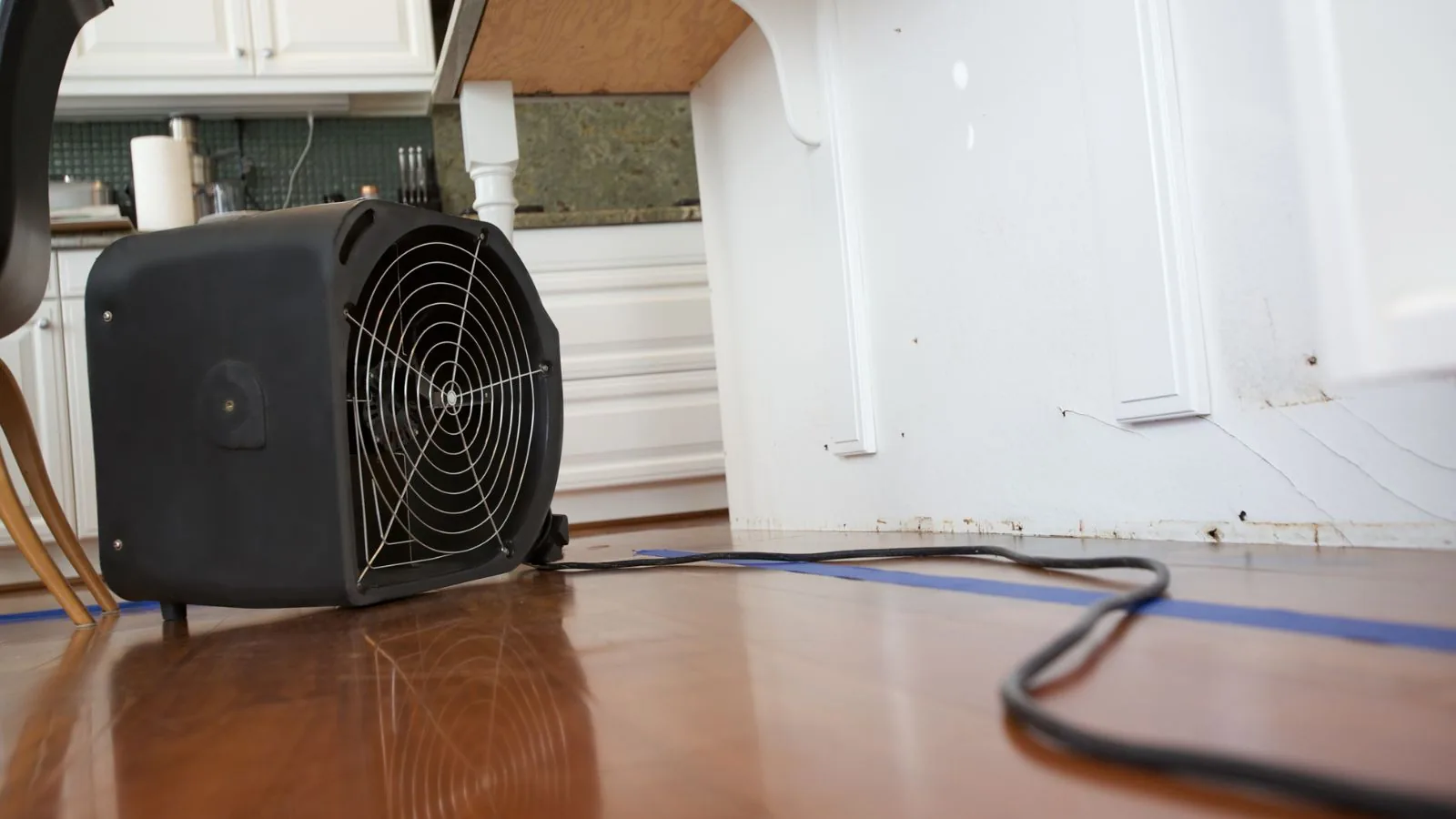
- Dry with air movers, dehumidifiers and, when needed, a cavity drying system.
- Rebuild the damaged cabinet parts and flooring once readings are dry.
Kitchen leak and wet cabinets?
Call and describe the source. Dispatch explains what to move and what to leave until a crew arrives.
What kitchen cleanup costs depend on
- Cabinet material. Particleboard costs more to replace than it saves by drying.
- Flooring. Continuous flooring under cabinets can be a bigger job.
- Countertop type. Lifting stone is slow and carries risk.
- Duration of the leak. Slow leaks rot more wood.
- Appliance repair. A plumber or technician prices the fix.
Cabinet material is often the deciding line. Describe the sink or appliance at (440) 276-9091.
Insurance usually separates sudden losses from long-term seepage. Keep the failed part, photograph the cabinet before emptying it, and ask your insurer what is covered. Related pages include appliance leaks, structural drying and mold remediation for cabinets with a musty smell.
What to do to check your own kitchen for a slow leak
- Empty the cabinet under the sink and look at the floor of the cabinet for stains, swelling or flaking.
- Dry the pipes with a paper towel and check again after an hour for fresh moisture.
- Feel along the toe kick near the dishwasher for softness.
- Pull out the refrigerator and check the floor and the water line behind it.
- Look at the water meter with every fixture off to see if it moves.
Do this every few months in a house with older plumbing. A damp towel under the sink tells you the story long before a cabinet fails. Kitchens in Amherst and every other Lorain County town hide supply lines in the same places, so the checks apply anywhere.
Questions we hear about this
An active leak is urgent because it keeps soaking cabinets and floors. Close the valve and call. A slow, stopped leak is less urgent but should be looked at soon.
Solid wood often can. Particleboard that has swollen usually cannot. A moisture reading and a look at the cabinet floor decide.
Not always. Crews dry the cabinet base from the front or back where possible. Stone tops are only lifted when the cabinet must be replaced.
Look for a musty smell, a swollen toe kick, a soft floor by the dishwasher or a rising water bill. A moisture meter finds what the eye cannot.
Sudden failures are often covered, while slow leaks may not be. Read your policy and talk with your insurer.
Water spreading right now?
Call the 24/7 dispatch line, describe what you see, and get the next steps while you wait.
Call (440) 276-9091