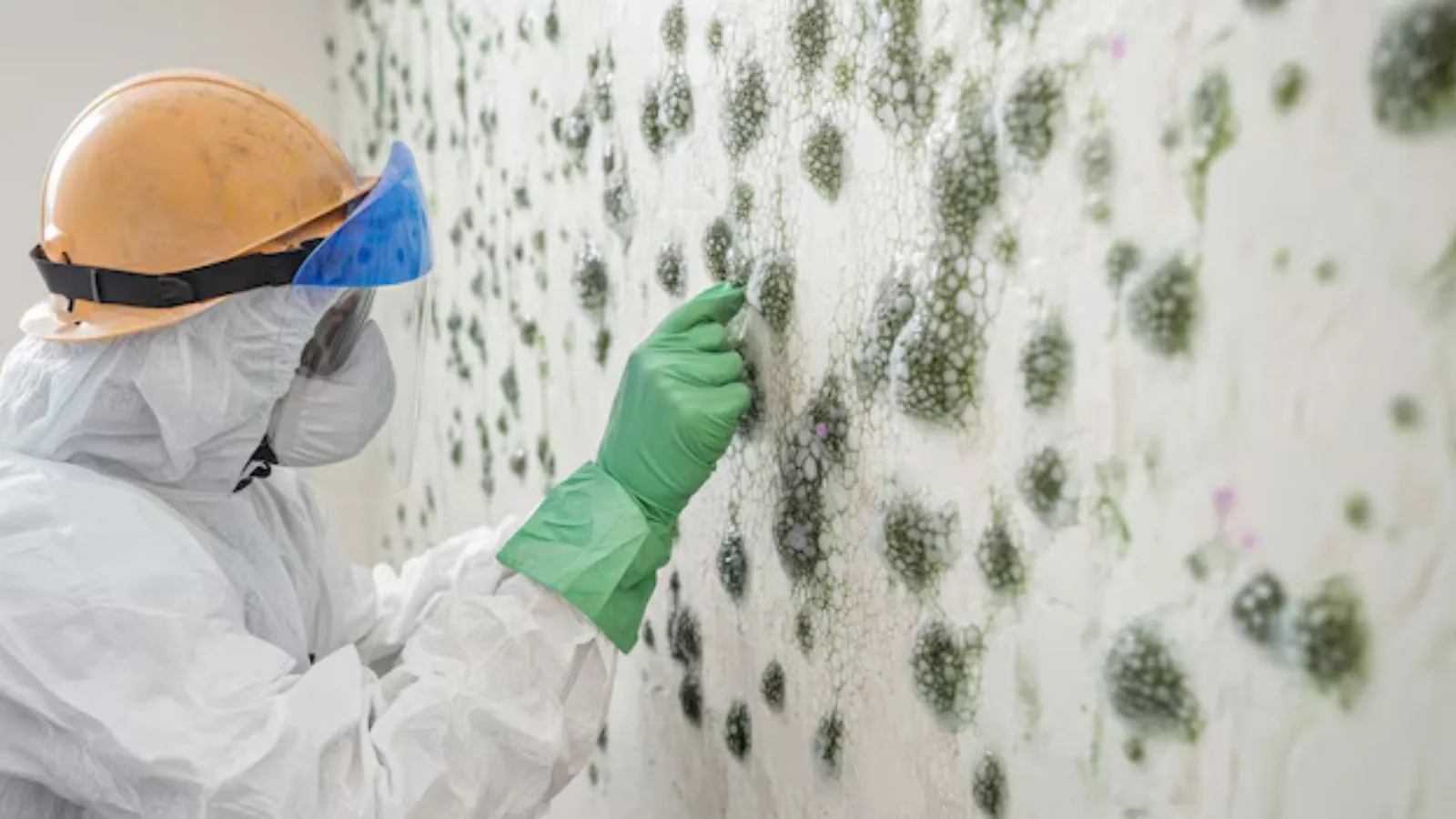
How Dangerous Is Black Mold? A Lorain, OH Guide
Black mold gets a lot of attention online. This guide sticks to what a restoration company can honestly say, and points to the right people for health questions.
Searches for black mold usually come from a person who has seen dark growth and wants to know what it means. A restoration company is the wrong source for health advice, so this guide does not make health claims. It explains what can be known from the surface, what testing can tell you and who to ask about symptoms.
Color does not identify mold
Mold can be white, green, gray, brown or black, and one species can show several colors. A dark patch on a wall or a ceiling may be mold, but it could also be soot, dirt, staining from water or a plumbing leak. You cannot name a species by color alone.
What a restoration crew can tell is whether a surface is wet, whether a material is damaged and whether growth is likely to continue. Those facts decide what to do next, whatever the label.
What testing can and cannot tell you
| Option | What it shows | Limits |
|---|---|---|
| Visual inspection | Where growth is and how far it extends | Cannot name species |
| Moisture mapping | Where materials are wet | Does not detect growth |
| Air or surface sampling by an independent inspector | Types present and amounts compared with outdoor air | Results depend on how and when samples were taken |
Testing is optional in many cases. If there is visible growth and a known water source, the next step is to fix the moisture and remove affected materials. An independent inspector is the right person to ask about sampling, and a restoration company can explain what the results would change.
Who to ask about symptoms
If you or someone in your home has symptoms you connect to the indoor air, ask a physician. Public health agencies also publish guidance on mold and indoor moisture. This site cannot say what mold does to a person, and any claim of that kind should come from a medical source.
Found dark growth and want a plan?
Call the dispatch line and describe where it is, how big it looks and what water was there before.
What to do while you wait
- Keep the area closed off and avoid disturbing the growth.
- Stop any active leak or condensation source.
- Run a dehumidifier in the room if the air feels damp.
- Do not sand, scrub or fan the area.
- Take dated photos for your records.
Where dark growth tends to show up locally
In homes near Lake Erie, dark growth often appears on north-facing walls, in bathrooms without a working fan, around basement windows and in crawl spaces. Cool surfaces collect condensation, and condensation is moisture.
The crawl space page explains how a damp floor system can feed growth that is out of sight.
What to record before anyone arrives
Write down when you first saw the growth, what the room smells like and whether the area has been wet before. Note any recent leak, roof repair or plumbing work nearby. These details help a contractor find the moisture source faster than the growth alone does.
Measure the patch roughly and photograph it with something for scale, like a coin or a tape measure. A second photo a week later shows whether it is spreading or stable. That comparison is more useful than any guess about color.
Questions worth asking any contractor
- Will you find and report the moisture source, not just the growth?
- Will there be containment and a written scope before work begins?
- How will you confirm the area is dry afterward?
- Who handles testing if I want an independent opinion?
- What will you remove, and what will you clean and keep?
A good answer is specific and mentions moisture readings. Be cautious of anyone who promises that growth will never return, because no one can promise that if the area gets wet again. Honest contractors talk about moisture control and verification instead.
When removal is part of the plan
If growth sits on drywall, insulation or carpet, those materials are usually removed. Framing is cleaned and dried. The work is done under containment so spores stay in the work area, and a final check confirms the moisture readings. The mold remediation page describes the process.
Homes in Amherst and Vermilion see the same patterns, and the answers on this page apply to both. In every case, the root cause is the moisture, not the color.
Questions we hear about this
This site does not make health claims. Color does not identify a species, so ask a physician about symptoms and an independent inspector about testing.
You cannot be sure by sight. Dirt, soot and water staining can look similar. A moisture reading and, if needed, testing give better answers.
Not always. If there is visible growth and a known leak, fix the water and remove affected materials. Testing can help in unclear cases.
Small spots on hard surfaces may be cleaned with care. Larger areas, drywall and anything after sewage or flood water should be handled by a crew.
A musty smell means moisture is probably present. Finding the source is the next step, and a moisture meter and a thermal camera are the usual tools.
Water spreading right now?
Call the 24/7 dispatch line, describe what you see, and get the next steps while you wait.
Call (440) 276-9091