Musty Smell After Water Damage: Finding the Source in Lorain, OH
A musty smell is your nose telling you there is moisture somewhere. The work is finding where it is hiding.
A musty smell after a leak or flood is common, and it almost always means something is still damp. The smell can come from carpet pad, wall cavities, insulation or a crawl space. This page explains how to narrow it down. It makes no health claims, so ask a physician about any symptoms.
Why smells linger after drying
Surface drying can look finished while the material underneath stays wet. Carpet pad, the bottom of drywall and the framing behind baseboards are slow to dry. If the room is closed up and humid, the smell lingers even after the visible water is gone.
Where to look first
| Location | Why it holds moisture | How to check |
|---|---|---|
| Under carpet and pad | Pad acts like a sponge | Lift an edge and feel, or use a moisture meter |
| Wall bottoms and baseboards | Drywall wicks water upward | Meter readings along the wall |
| Cabinet bases | Particleboard holds water | Check the toe kick and the floor of the cabinet |
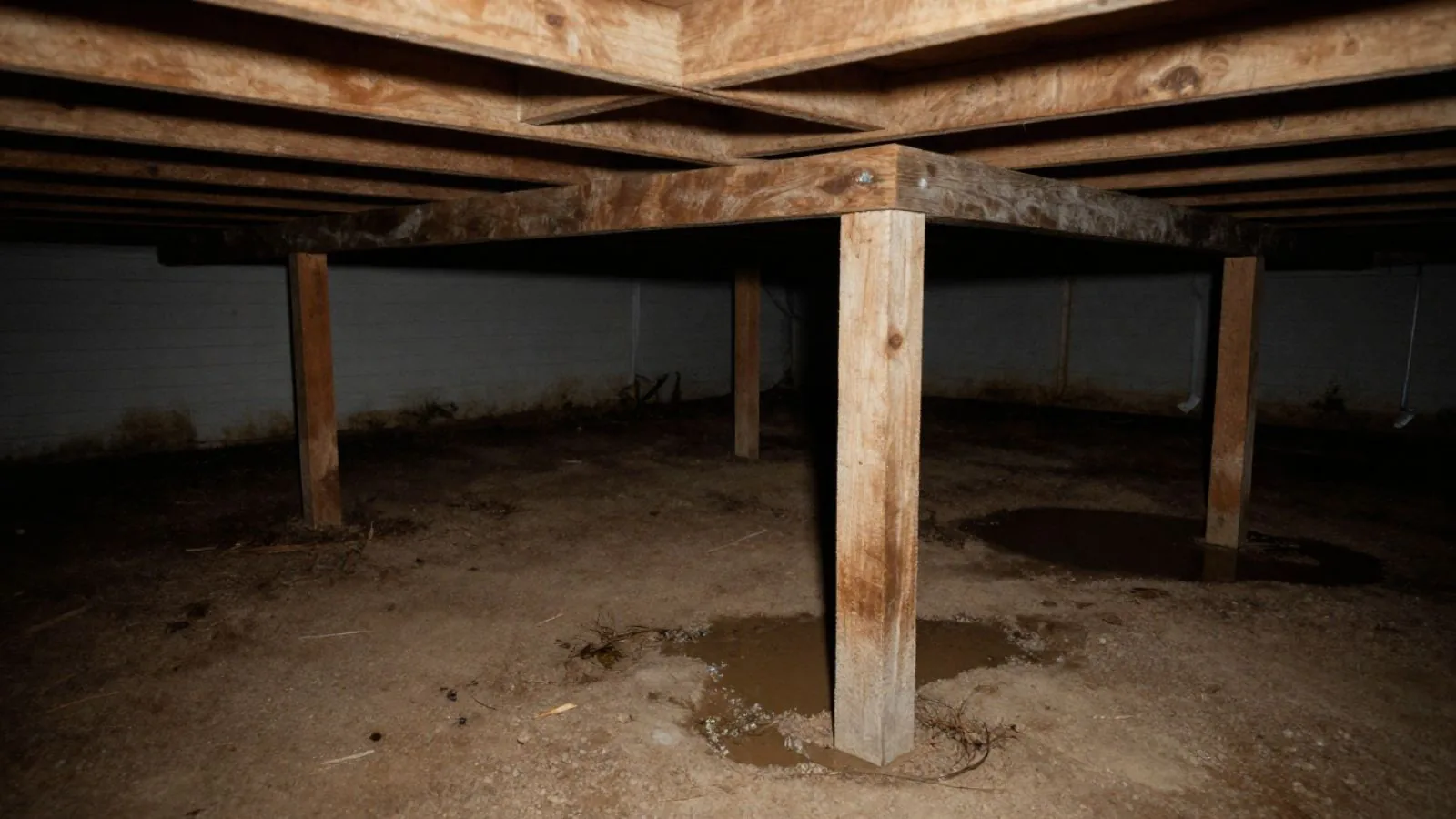
| Crawl space or basement corners | Cool, closed air | Humidity reading and a visual check |
| Attic and ceiling cavities | Wet insulation after a roof leak | Thermal camera or meter |
Start at the spot where the smell is strongest and widen the search. Smell can travel along ducts and floors, so the loudest point is not always the source. A moisture meter and a thermal camera find what a nose cannot.
Tools that find hidden moisture
- A pin or pinless moisture meter for drywall, wood and subfloor.
- A thermal camera that shows cooler, wetter areas.
- A hygrometer to measure room humidity.
- A borescope to look inside a wall through a small hole.
- A visual check with a flashlight in crawl spaces and attics.
Many sources suggest keeping indoor humidity below about 50 percent. A dehumidifier and some air movement help. A reading that stays high after a leak is a sign that drying is not finished.
Smell and no source in sight?
Call dispatch and describe where it is strongest and what happened before. A reading can often find what a nose cannot.
Lake humidity in Lorain County homes
Homes near Lake Erie in Lorain, Sheffield Lake and Vermilion see humid summers, and cool basements can collect condensation. A closed room with damp carpet or stored boxes will smell musty faster than a ventilated one.
Check the AC drain line and the crawl space vapor barrier in particular. The AC leak page explains why a slow drip can wet a ceiling for weeks.
What to do once you find it
- Fix the source of the moisture.
- Remove materials that cannot be dried, such as soaked pad or insulation.
- Dry the area with dehumidifiers and air movers, and confirm readings.
- Clean hard surfaces and replace damaged finishes.
- Retest after a week to confirm moisture has not returned.
If you find visible growth or the smell is strong, the work may move into remediation, with containment and removal. The mold remediation page explains that process. Avoid masking the smell with sprays before the source is found, since it hides the clue without fixing the problem.
Simple things that help while you search
- Open interior doors so air moves through the home.
- Run a dehumidifier in the basement or the affected room.
- Empty and air out closets and cabinets that share a wall with the damp area.
- Wash or discard fabrics that hold the smell, such as old rugs.
- Keep a log of where the smell is strongest and what the weather has been.
These steps will not solve a hidden leak, but they reduce humidity and give you better information. If the smell fades and returns with wet weather, the clue points to water entering from outside, like a window well or a foundation crack.
Why the smell can return in wet weather
A smell that appears after a long rain suggests water is entering through a foundation wall, a window well or a poorly sealed basement door. The fix is on the outside, such as extending downspouts or improving grading, and the inside only needs drying once.
Note the dates the smell returns and compare them with the weather. That simple record often points straight to the cause.
If nothing turns up
Sometimes the source is not a leak but a drain trap that dried out, a damp towel pile or a poorly vented bathroom. Check those before you open walls. If the smell comes back and no cause appears, a restoration crew can take readings in areas you cannot reach.
Homes in Vermilion and Sheffield Lake near the water often have this experience in late summer, when humidity peaks. A dehumidifier in the basement often helps, but only after any active leak has been fixed.
Questions we hear about this
Moisture is probably still present in carpet pad, drywall, insulation or framing. Finding and drying it is the way to clear the smell.
It hides the clue without fixing the cause. Find the moisture first.
Not always, but it means moisture is likely present. A meter reading and a visual check help sort it out.
Many sources suggest staying below about 50 percent. A hygrometer shows your actual level.
A moisture meter or thermal camera can show wet areas, and a small inspection hole may be used to look inside.
Water spreading right now?
Call the 24/7 dispatch line, describe what you see, and get the next steps while you wait.
Call (440) 276-9091