What Kills Mold in a Lorain, OH Home?
The short answer is that cleaning products are only half the job. Mold stops growing when the moisture stops, and that is where the real work happens.
People search for what kills mold and expect a product name. The more useful answer is moisture control. Mold needs water, a food source such as drywall paper or wood and time. Take away the water and growth stops, and cleaning then removes what is left. This guide explains what works, what does not and when the job is too big to handle yourself.
Why moisture comes first
If a wall stays damp, cleaning the surface does not fix it. Growth can return as soon as the surface is damp again. That is why the sequence is always: find the water source, stop it, dry the area and then remove or clean what is affected.
Many cases of mold in a Lorain home trace back to a source that was never fixed, such as a slow plumbing leak, a clogged AC drain or a damp crawl space. Our AC leak page and the crawl space page describe two common hidden sources.
What works
| Material | Usual approach |
|---|---|
| Hard, non-porous surfaces such as tile or sealed counters | Detergent and water, scrubbed and dried |
| Painted drywall with light surface spots | Cleaned if the board is firm and dry, otherwise cut out |
| Drywall that is soft or stained through | Removed and replaced |
| Insulation and carpet pad | Removed and replaced |
| Wood framing | Cleaned, sanded or treated, then dried |
What not to do: methods that disappoint
- Painting over growth, which seals it in without removing it.
- Spraying a cleaner on porous drywall, where it does not reach roots below the surface.
- Running a fan across the patch, which can spread spores into other rooms.
- Using a dehumidifier alone on materials that are already contaminated.
Bleach and other strong products are often the first thing people reach for. They can lighten a stain without removing the growth underneath, and they should never be mixed with other cleaners. For anything beyond a small spot, a crew with containment is the safer route.
Small spot or real job?
A patch on a bathroom tile joint is a cleaning job. A patch larger than a few square feet, growth inside walls, growth after sewage or flood water and any musty smell without a visible source are signs the job is bigger. In those cases, call for advice before disturbing the area.
Not sure how big the problem is?
Call and describe what you see. Dispatch can help decide if it is a cleaning job or a remediation job.
Lake humidity and basements
Lorain, Sheffield Lake and Vermilion sit beside Lake Erie, so summer air is often humid and basements stay cool. Cool concrete walls collect condensation, which feeds growth in stored boxes and carpet.
A dehumidifier, a clear drain and gutters that move water away from the foundation do more to prevent growth than any spray.
How long cleaning and drying take
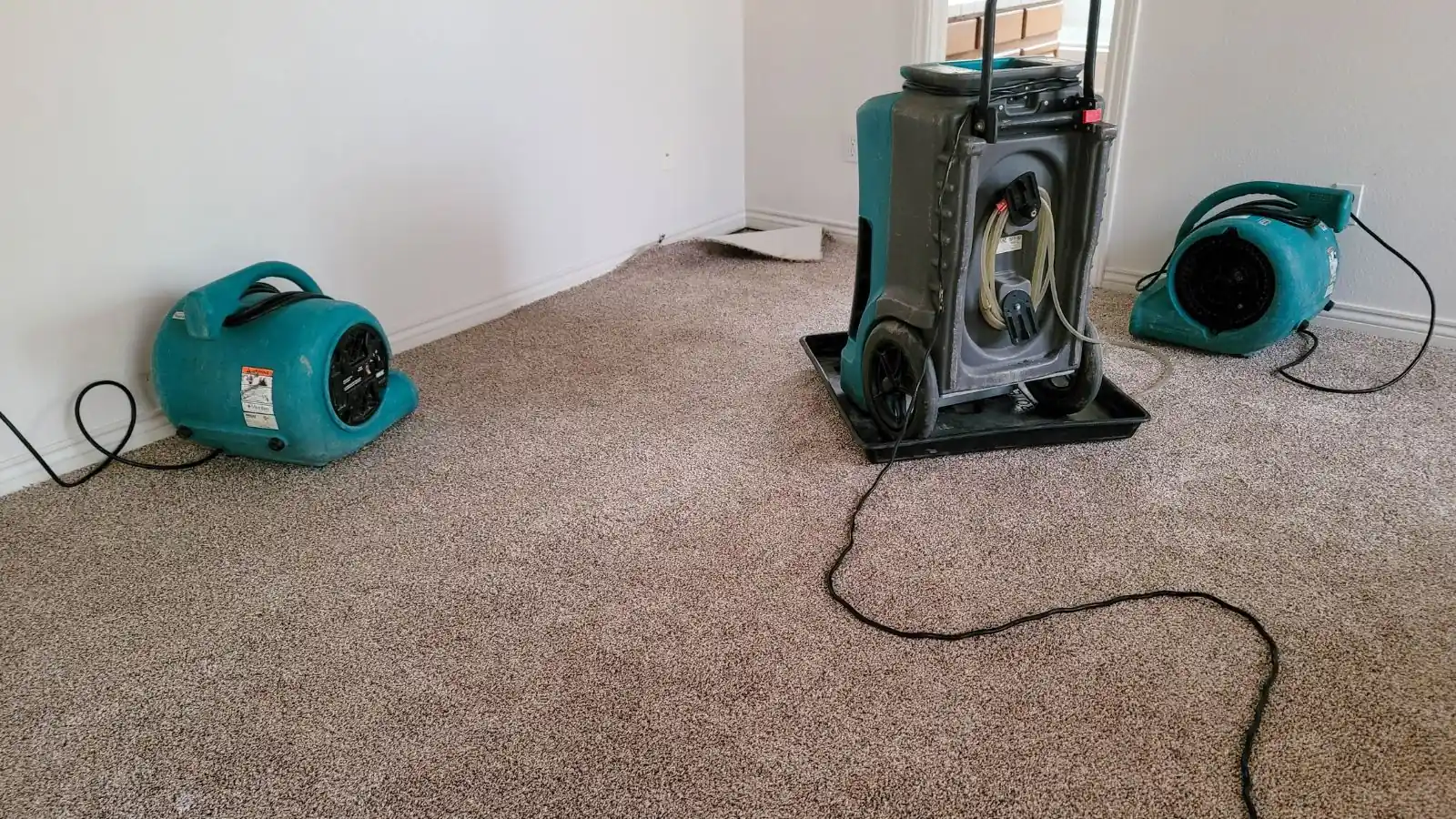
A small spot on a hard surface takes minutes to clean and a day or two to dry. A damp wall cavity takes longer, usually several days with air movers and a dehumidifier. Moisture readings, not the calendar, tell you when it is safe to close things up.
A routine for small spots
- Fix the leak or condensation source first.
- Wear gloves and a snug mask, and keep the room closed off.
- Wipe hard surfaces with detergent and water using a damp cloth, and bag the cloth.
- Dry the area with a dehumidifier and moving air.
- Check the spot a week later and look for a return of dampness.
If the stain comes back, the moisture is still there, and the source has not been found. That is the point to stop cleaning and start looking behind the surface. Pull a baseboard, check the back of the cabinet, look in the attic or ask for a moisture reading.
What a professional job adds
A remediation crew builds containment with plastic sheeting, runs negative air so spores stay in the work area and removes materials in sealed bags. Surfaces are cleaned with HEPA vacuums and damp wiping, then dried to the same standards used after any water loss. The mold remediation page explains each step.
A health note: this page makes no health claims. If anyone in the home has symptoms they connect to the air indoors, ask a physician. A restoration crew cannot diagnose or treat anything.
The same advice applies in Vermilion, where lagoon-front homes stay damp, and in Sheffield Lake, where lake humidity keeps garages and crawl spaces cool.
Questions we hear about this
Growth stops when the moisture stops, but nothing prevents it if the area gets wet again. The lasting fix is moisture control, followed by removal of affected materials.
They may clean or lighten a surface, but neither fixes the moisture, and neither reaches into porous materials. Never mix bleach with other cleaners.
Small spots on hard surfaces can be cleaned with care. Larger areas or growth after sewage or flood water should be handled by a crew.
A dehumidifier helps stop growth by lowering moisture, but it does not remove growth already on a surface.
Cool, damp basements near Lake Erie can collect condensation in summer. Drainage and humidity control matter more than the age of the house.
Water spreading right now?
Call the 24/7 dispatch line, describe what you see, and get the next steps while you wait.
Call (440) 276-9091